
If you are planning a commercial sign project in Florida, one of the first questions is usually also the most practical one: How much does a commercial sign cost in Florida?
We know why you’re here: you want a realistic idea of what commercial signage costs. So we’ll start with the numbers, then explain what drives those numbers.
Commercial Sign Cost Ranges in Florida
Here are some realistic starting points for budgeting a commercial sign project:
These figures should be treated as planning ranges, not quotes. A project’s final cost depends on its design, dimensions, materials, illumination, engineering, permitting, site conditions, installation requirements, and many other variables.
Commercial signage is custom manufacturing, and two signs that appear relatively similar in a rendering can require very different amounts of material, labor, specialized equipment, engineering, site work, electrical work, permitting, and installation. Understanding those differences is much more useful than simply knowing an average price.
And there is an important distinction to make from the beginning: The visible sign is not necessarily everything you are paying for.
With larger exterior signage in particular, a significant part of the project may be structural, electrical, underground, or administrative. You may never see those components once the project is complete, but they are part of what makes the sign safe, compliant, durable, and properly installed.
Why Is There Such a Large Difference in Sign Prices?
The simple answer is that commercial signs are manufactured, not picked from a shelf.
Consider something as straightforward as dimensional metal letters. The price can change based on the number of letters, their size, depth, material, mounting system, illumination, and finish. Metal itself can have brushed, mirror, anodized, or specialty finishes designed to achieve the appearance of gold, bronze, aluminum, wood, and many other surfaces.
Another detail that not many people realize: It would seem logical to assume that making a letter smaller always makes it cheaper. It doesn’t. A 15-inch illuminated metal letter uses considerably more material than a 2-inch letter. Material therefore becomes an important part of its cost.
But producing a 2-inch illuminated metal letter can present an entirely different manufacturing challenge. At that scale, fitting and fabricating the components required to illuminate the letter can demand specialized machinery, techniques, and significantly more precision. Most of the sign companies can’t actually manufacture those…
That example illustrates something important about custom signage: Price doesn’t scale neatly with dimensions. Complexity has a cost of its own.
What Actually Determines the Cost of a Commercial Sign?
Here are some realistic starting points for budgeting a commercial sign project:
1. Sign Type
An interior dimensional logo and a freestanding pylon sign are fundamentally different construction projects.
A pylon may require a substantial internal structure, engineered drawings, excavation and foundation work, electrical components, inspections, permitting, heavy equipment, and an installation crew.
A set of channel letters has a completely different manufacturing and installation process.
This is why asking for the price of «a business sign» without additional information is a little like asking for the price of «a commercial building.» The category tells us something, but not enough to estimate the project accurately.
2. Size (But Not Only Size)
Larger signs generally require more material. But increasing the dimensions can affect much more than the square footage of aluminum or acrylic being used.
A larger exterior sign can mean:
So a relatively small design change can sometimes affect several portions of the project simultaneously.
And as our small illuminated-letter example demonstrates, going smaller doesn’t necessarily make fabrication simpler either.
3. Number of Letters and Design Complexity
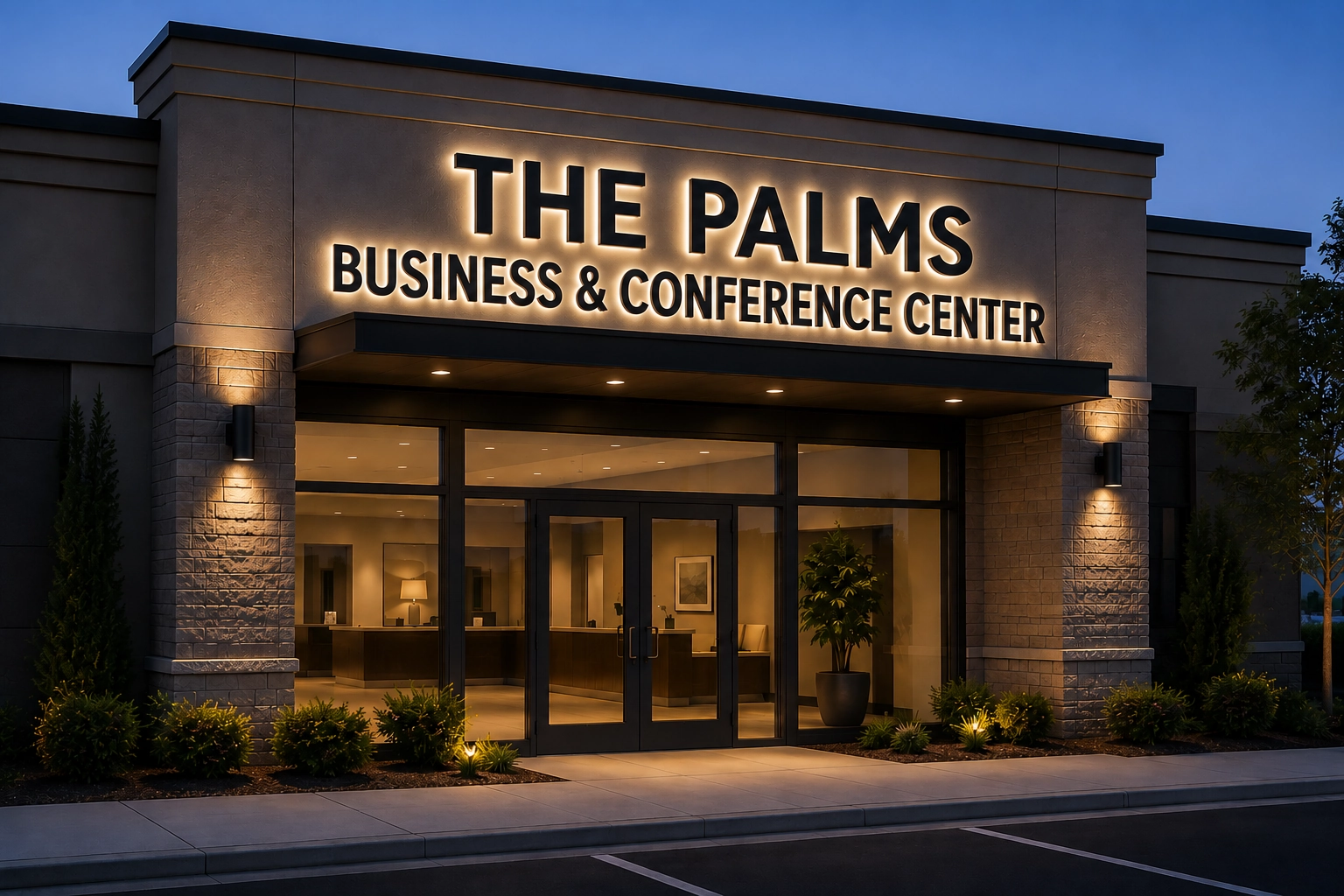
Compare: HOTEL
with: THE PALMS BUSINESS & CONFERENCE CENTER
Even at similar letter heights, those are very different fabrication jobs.
Each additional letter must be manufactured, finished, and installed. If the letters are illuminated, additional lighting and electrical components are involved as well.
Logos, unusual shapes, multiple colors, intricate typography, tight tolerances, and custom fabrication details can further increase complexity.
This is one reason a useful estimate needs the actual artwork or design, not simply approximate dimensions.

4. Materials and Finishes
Commercial signage can combine aluminum, acrylic, different metals, translucent materials, paints, vinyls, LEDs, and specialty finishes.
Even within one material category, there can be substantial differences. A client asking for «metal letters,» for example, hasn’t yet defined the finished product.
Should they be brushed? Mirror finished? Anodized? Painted? Should the surface achieve the appearance of gold, bronze, aluminum, wood, or another architectural finish?
The right choice isn’t necessarily the most expensive one. It should make sense for the design, environment, desired appearance, and expected service life.
5. Illumination
Lighting changes both the appearance and construction of a sign.
Channel letters might be face illuminated, while reverse channel letters can produce a halo effect by projecting light onto the mounting surface behind them. Other commercial signs can incorporate internal illumination or LED displays.
But illumination isn’t simply a matter of «adding some LEDs.»
The sign has to be designed to accommodate lighting components, wiring and power supplies while remaining serviceable and producing the intended visual result. And someone ultimately has to provide the electrical infrastructure that powers it.
Those requirements need to be considered during planning—not discovered on installation day.
The Part of Your Sign You May Never See
This becomes particularly important with monument and pylon signs. Imagine looking at a finished monument sign from the parking lot. You see the cabinet, architectural elements, lettering, and illumination.
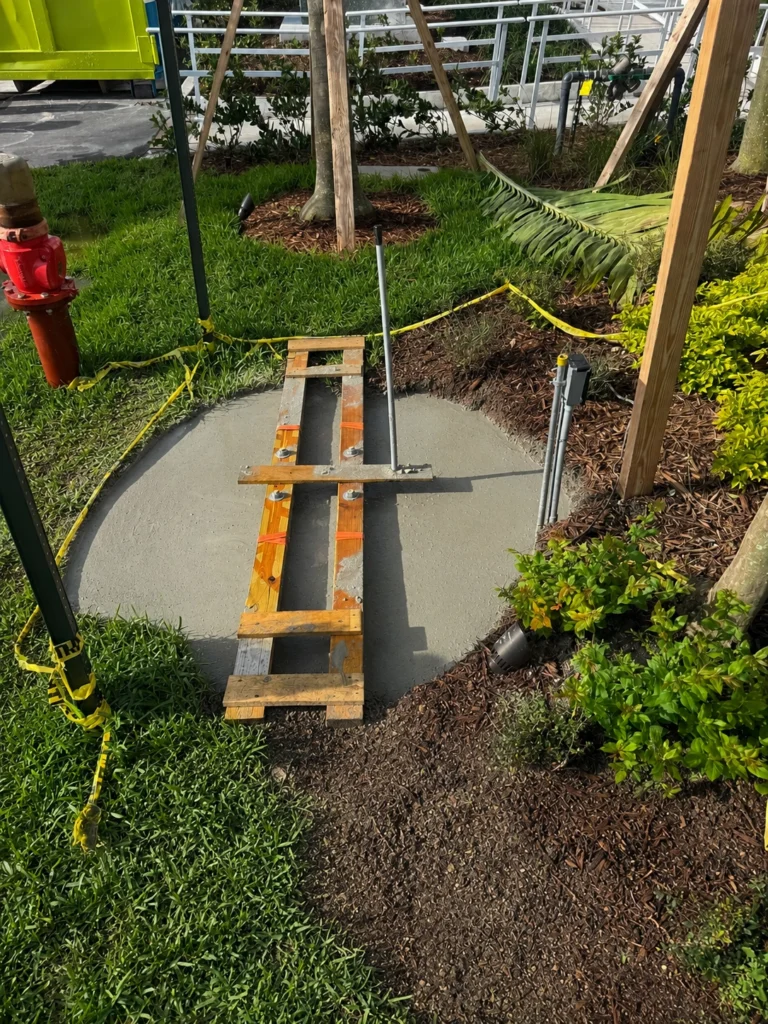
What you don’t see may include one of the most important parts of the project: the foundation.
Freestanding signs have to transfer structural loads safely into the ground. That can require a specifically designed foundation as part of an engineered system.
A pylon takes this concept further. Its height, size, structure and exposure can make structural engineering a significant part of the project.
So when someone looks at a $15,000+ pylon and thinks only about the visible aluminum, acrylic and LEDs, they are looking at only part of what was actually built. Some of what you’re paying for ends up underground. And that’s exactly where it needs to be.
Fabrication Cost Is Not the Same as Project Cost
This distinction matters when comparing estimates.
Suppose you receive two numbers for what appears to be the same sign. One is considerably lower. That doesn’t automatically mean the lower quote is bad, nor does it mean the higher quote is better.
First, determine whether you are actually comparing the same scope of work.
- Design and production drawings
- Engineering
- Permit processing
- Materials and fabrication
- Specialty finishes
- Lighting components
- Foundation or structural work
- Electrical coordination
- Transportation
- Installation labor
- Crane, bucket truck, or other access equipment
- Inspections
Depending on the project, the complete scope could involve:
One proposal may include items another treats separately. So before comparing the bottom line: Don’t just compare the number. Compare the scope. A $15,000 proposal and a $20,000 proposal aren’t really $5,000 apart if thousands of dollars of necessary work are absent from the first one.
Where Should You Be Careful About Cutting Costs?
Not every dollar saved has the same value. Reducing unnecessary decorative complexity may be a perfectly sensible way to control a budget. Reducing something that affects structural integrity, weather resistance, electrical reliability, serviceability, or installation quality is a very different decision.
Commercial exterior signage is expected to remain outside through Florida sun, rain, wind, heat, and humidity while continuing to represent the business every day.
That makes initial cost only one part of the financial decision.
Durability, maintenance, repairability, energy use where applicable, and expected service life all contribute to the actual cost of owning the sign.
A cheaper sign that requires premature replacement isn’t necessarily the cheaper sign.
So, How Much Will Your Commercial Sign Cost?
For early budgeting in Florida, $1,000–$1,500 can be a reasonable starting point for a custom interior sign, around $4,000 for exterior channel letters, around $8,000 for a monument sign, and approximately $15,000 for an economical custom pylon project.
But those numbers are the beginning of the conversation, not the end.
The right budget depends on what must be designed, manufactured, engineered, permitted, and installed to address the property’s actual identification and visibility needs.
At Saul Signs, we approach that as a complete project.
If you’re planning commercial signage in Florida, send us the property location, artwork, photographs, drawings, and any information you already have about the project. We can evaluate the scope and help you understand what it will realistically take to build it properly.